


What the 21-Day Review Period in a Settlement or Severance Agreement Actually Means

When a workplace dispute gets resolved through a settlement or severance agreement, most people focus on the number. What is the payment? What claims are being released? When does it take effect? The deadlines buried in the fine print tend to get less attention, and that is often where things go wrong.
New York law requires specific review and revocation periods in certain employment agreements. Those requirements are not suggestions. Skipping them, or getting them wrong, can make the agreement unenforceable.
When the 21-Day Period Applies
Under current New York law, the 21-day review and seven-day revocation requirement applies in two situations. The first is any agreement that resolves claims of discrimination, harassment, or retaliation under the New York State Human Rights Law when the employer wants to include a non-disclosure provision. The second is any agreement releasing age discrimination claims under federal law for employees who are 40 or older, which has been required under the federal Older Workers Benefit Protection Act for decades.
In practical terms, this covers a significant share of employment settlements and severance packages. Discrimination and harassment claims are common, and NDAs are a standard feature of most settlement agreements. In some situations, both requirements may apply to the same agreement.
What the 21 Days Are Actually For
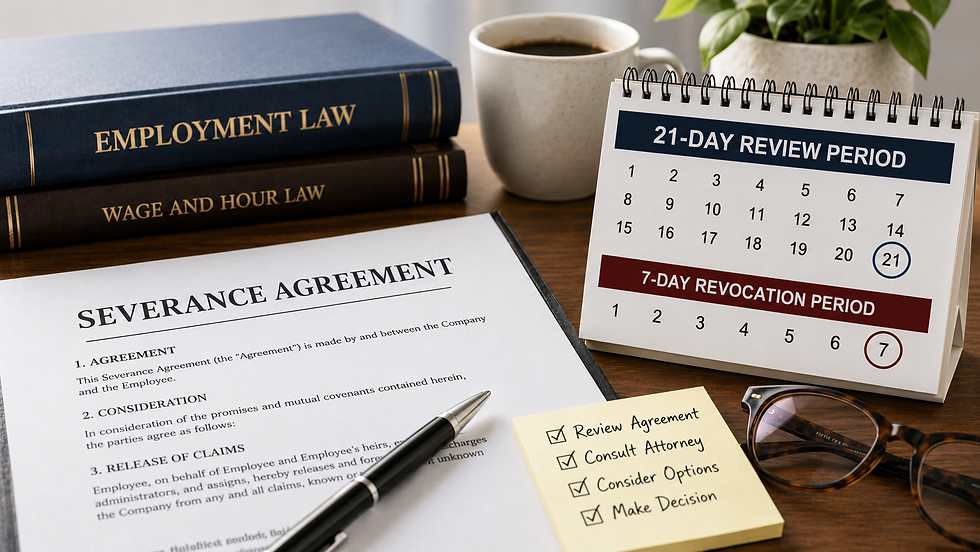
The 21-day period gives the employee time to review the agreement, consult with an attorney, and make a considered decision before signing anything. The clock starts when the employee receives the agreement. The employee can choose to sign before the 21 days are up. What the law prevents is the employer pressuring them to do so or offering better terms as an incentive to sign early.
Once signed, the employee still has seven days to change their mind. That revocation window cannot be contracted away, and the agreement does not become effective until those seven days have passed without a revocation. This applies regardless of what the agreement itself says about it.
What Happens If the Requirements Are Not Followed
Non-compliance is not a technicality. An agreement that fails to provide the required review period or revocation window can be challenged as invalid. For an employer, that means a release of claims they believed was final may not hold up. For an employee, it can mean the agreement they signed under pressure did not actually waive the rights they thought it did.
The stakes are different on each side of the table, but the compliance requirement applies to both. Employers drafting severance or settlement agreements need to build these periods into their process from the start. Employees receiving one need to understand that the clock running is not procedural theater. It is a legal protection.
Consider a straightforward example. An employee receives a severance agreement on a Friday and is told it must be signed by Monday to receive the offered payment. Where a statutory review period applies, that kind of pressure runs directly into the law’s requirements. The employer cannot condition payment on the employee giving up the time the law gives them to review.
New York Legislation Employers Should Be Watching
The New York Legislature passed the No Severance Ultimatums Act in June 2026, sending it to Governor Hochul for signature. If signed, the law would extend the 21-day review and seven-day revocation requirement to all severance agreements in New York, regardless of whether discrimination claims or non-disclosure provisions are involved. As of the date of this post, the Governor has not yet signed or vetoed the bill.
If enacted, the law would take effect immediately. Employers who use standard severance templates should be watching this closely. An agreement that is compliant today may need to be revised on short notice if and when the Governor acts.
A Procedural Mistake Can Undermine the Agreement
Settlement and severance agreements resolve real disputes, and the procedural requirements around them exist for a reason. Missing a deadline or drafting an agreement that does not meet the statutory requirements can unravel a resolution that both sides worked to reach.
Whether you are an employer preparing a severance package or an employee who has received one, getting the procedural details right is as important as the terms themselves. The Siegel Law Firm handles employment matters for both employers and employees, including discrimination claims, severance negotiations, unpaid overtime and wages, and settlement agreements. Call 516-558-7559 or email info@thesiegelawfirm.com to discuss your situation.


Comments